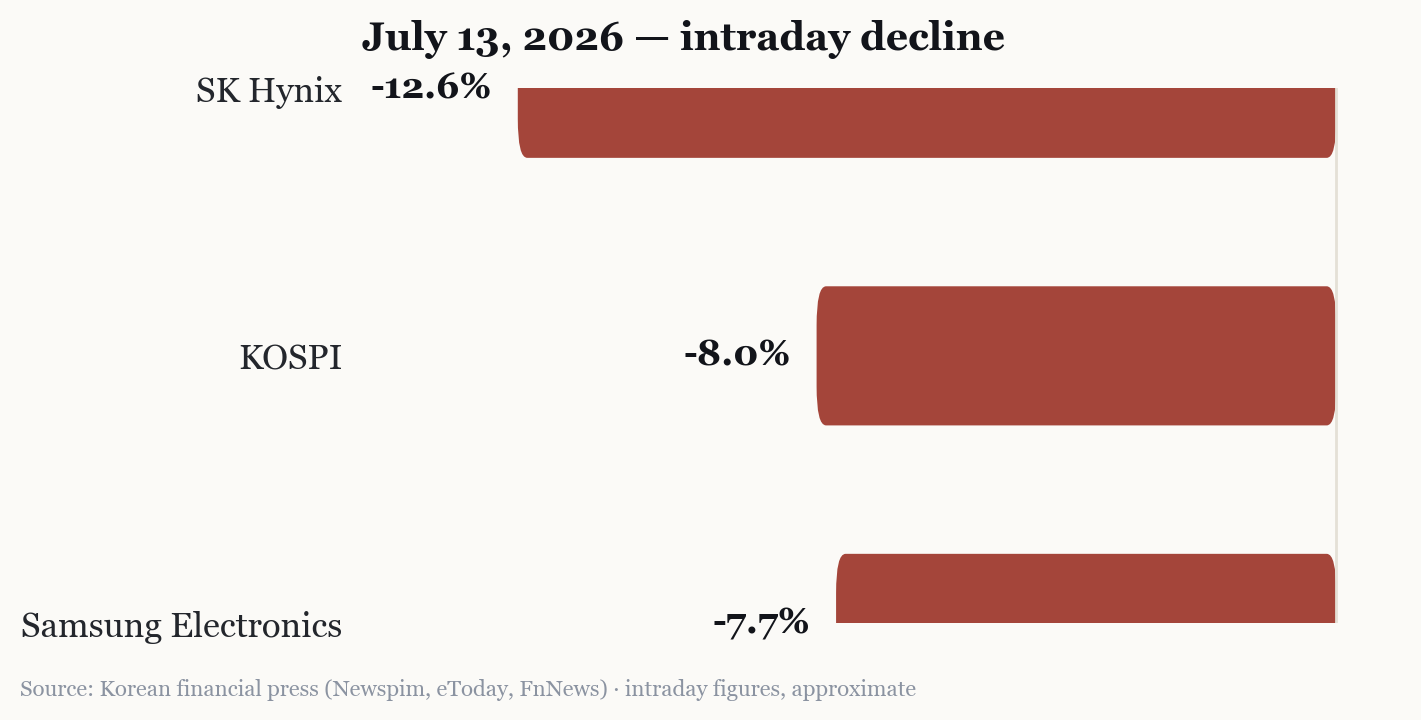
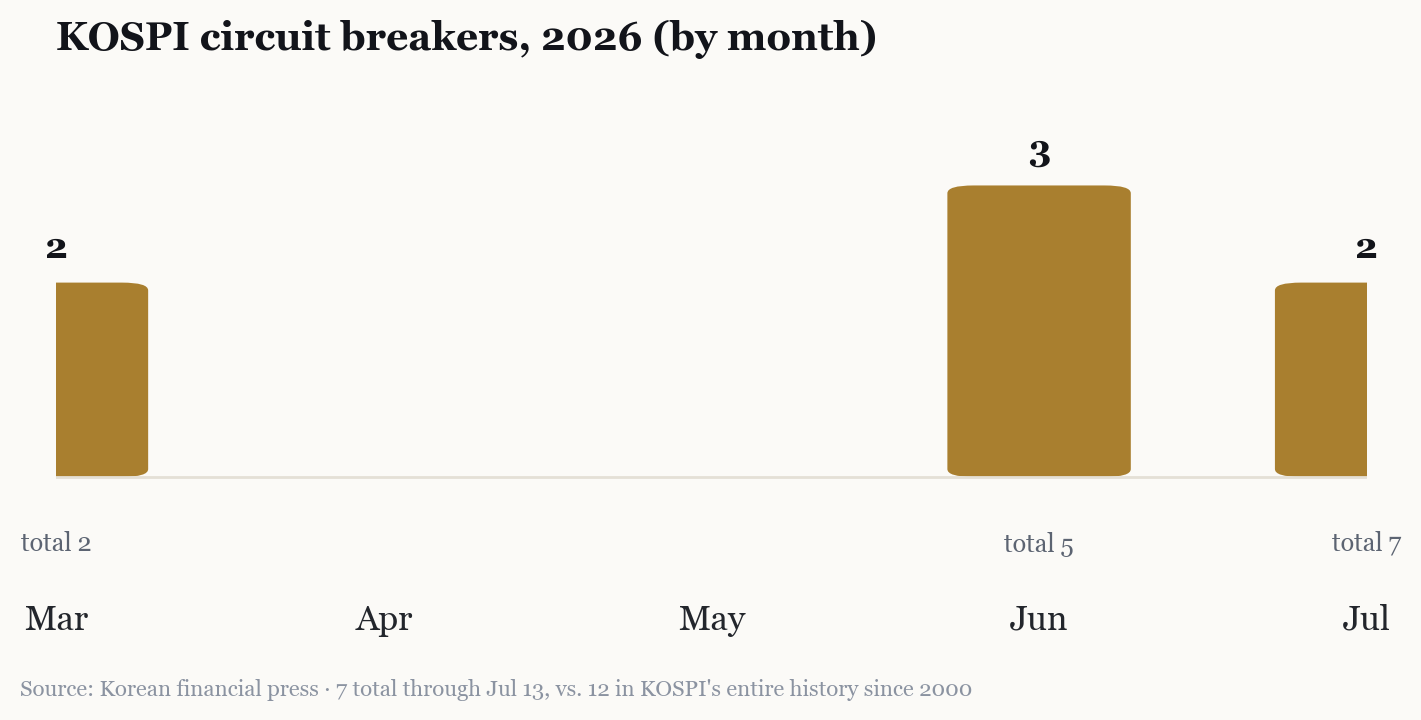
6일 전, 삼성전자는 창사 이래 최고 분기 실적을 발표했다. 오늘, 삼성전자 주가는 8% 가까이 빠졌고 SK하이닉스는 12% 넘게 폭락했으며, 코스피는 2026년 들어 일곱 번째 서킷브레이커를 발동시켰다 — 코스피 26년 역사 전체에서 발동된 서킷브레이커의 절반 이상이 올 한 해에 몰려 있다. 이건 펀더멘털이 약해졌다는 이야기가 아니다. 하루 동안 펀더멘털이 시장에서 아무 의미가 없어졌을 때 벌어지는 일에 대한 이야기다.
면책조항: 이 글은 일반적인 분석이며 투자 조언이 아닙니다. 어떤 금융 결정을 내리기 전에도 반드시 스스로 조사하시기 바랍니다.
오늘 무슨 일이 있었나
| 수치 | |
|---|---|
| 코스피 | 장중 최대 약 8~9% 하락, 두 달 만에 잠시 7000선 붕괴 |
| 삼성전자 | -7.7%, 263,000원 |
| SK하이닉스 | -12.6%, 200만원 선 붕괴해 약 190만원대 |
| 원/달러 환율 | 장중 1,500원 안팎까지 약세 |
| 서킷브레이커 | 2026년 7번째 (2000년 이후 코스피 역사 전체로는 12번) |
오전 중반, 코스피200 선물이 5% 넘게 빠진 채 유지되면서 프로그램 매도호가를 5분간 정지시키는 ‘사이드카’가 먼저 발동됐다. 오후 들어 지수 낙폭이 8%를 넘어서자 전체 거래를 20분간 정지시키는 서킷브레이커가 발동됐다.
트리거 하나: 또다시 중동發
이번 급락의 직접적인 원인은 기업이 아니라 지정학이었다. 주말 사이 이란이 전 세계 원유의 약 5분의 1이 지나는 길목인 호르무즈 해협 봉쇄를 선언했고, 미국은 이란 목표물에 추가 공습을 단행했다. 이란은 중동 내 미군기지를 타격하며 보복했다. 이 조합은 전 세계 위험자산을 끌어내렸고, 특히 원화를 강타해 원/달러 환율이 안전자산인 달러를 찾는 자금 이동 속에 1,500원 부근까지 치솟았다.
이는 2026년 한국 증시에서 낯선 패턴이 아니다. 불과 며칠 전인 7월 9일에도 비슷한 확전으로 코스피가 7100선 아래로 밀린 바 있다. 중동 리스크는 이 시장에 유독 민감하게, 거의 매달 반복되는 충격으로 자리잡았다.
트리거 둘: SK하이닉스의 역설
더 흥미로운 이야기는 SK하이닉스다. 그리고 이건 정말로 기이하다. 265억 달러 규모의 나스닥 데뷔 — 미국 역사상 최대 외국기업 IPO — 로부터 사흘이 지난 오늘, 미국주식예탁증서(티커 SKHY)는 미국 거래에서 또다시 12~13% 뛰었다. 반면 서울에서는 같은 회사의 같은 주식이 12% 넘게 빠졌다. 한 회사가 이토록 사랑받으면서 동시에 이토록 외면받는 건, 구조적인 무언가가 작동하지 않는 한 불가능하다.
세 가지가 이 간극을 설명한다:
- 차익실현. SK하이닉스 주가는 나스닥 상장을 전후해 강하게 뛰어올랐다. 이런 급등 이후 국내 투자자들이 차익을 실현하는 건 이상한 일이 아니라 자연스러운 일이다.
- 교차상장 차익거래. 일부 외국계 펀드가 “ADR 매수·서울 본주 공매도” 전략을 취한 것으로 알려졌다 — 같은 회사가 갑자기 두 시장, 두 통화, 두 시간대에 동시 상장되면서 생기는 구조적 결과다. 이 거래는 ADR 가격이 오르는 동안에도 기계적으로 서울 가격을 끌어내린다.
- 지분 희석. 기존 주식을 새 거래소로 옮기기만 하는 일반적인 2차 상장과 달리, SK하이닉스의 나스닥 공모는 대부분 신주 발행을 통해 자금을 조달했다 — 실제 자본을 조달했지만 기존 주주 입장에서는 실질적인 지분 희석이기도 하며, 시장은 이제 이를 가격에 반영하고 있다.
여기에 더해 한국투자증권은 SK하이닉스의 2분기 영업이익 추정치를 시장 컨센서스인 약 65조원보다 낮은 60조 4천억원으로 하향했고, 2026년과 2027년 전망치도 각각 9%, 11% 낮췄다. 어떤 역사적 기준으로 봐도 여전히 경이로운 숫자이긴 하지만, 열광적인 IPO 주간 직후에 나온 하향 조정은 정확히 코리아 디스카운트 글에서 짚었던 “소문에 사서 뉴스에 판다”는 패턴의 위험 신호다.
아이러니: 삼성전자의 실적은 정반대를 말한다
“반도체 사이클이 끝나간다”는 서사와 오늘의 급락을 나란히 놓기 어렵게 만드는 지점이 있다. 불과 6일 전인 7월 7일, 삼성전자는 2분기 잠정 영업이익 89조 4천억원을 발표했다 — 전 분기 대비 56%, 전년 동기 대비 18배 넘게 증가한 수치로, 빡빡한 메모리 공급과 강력한 HBM 수요가 이끌었다. 이 숫자 하나만으로도 엔비디아의 최근 분기 영업이익을 넘어섰다. 압도적인 차이로, 삼성전자 역사상 최고의 분기였다.
그러니 지난 한 주의 두 헤드라인 사실은 불편하게 나란히 놓여 있다: 삼성전자 사상 최고 분기 실적, 그리고 한국 증시 수년 내 가장 격렬한 한 주. 이 긴장이야말로 진짜 이야기다 — 메모리 붐이 끝났다는 판정이 아니라, 지금 이 시장이 분기 실적보다 지정학적 충격과 IPO 메커니즘의 소음을 훨씬 더 공격적으로 가격에 반영하고 있다는 것.
줌아웃: 2026년은 한국 증시 사상 최고 변동성의 해
오늘의 급락은 진공 상태에서 벌어진 게 아니다. 이는 이례적인 변동성 행진의 정점이었다:
- VKOSPI(한국판 공포지수)는 6월 장중 97.99까지 치솟았다 — 2009년 공식 집계 시작 이후 최고치이며, 비공식 추정으로는 2008년 금융위기 저점에서 기록된 103 수준에 근접한다.
- 매수·매도 사이드카가 2026년 한 해에만 29차례 발동됐다 — 2008년 글로벌 금융위기 전체 기간에 기록된 26차례보다 많다.
- 오늘의 서킷브레이커는 2026년 일곱 번째다. 이 제도가 도입된 후 약 사반세기 동안 발동된 전체 횟수는 12차례에 불과하다.
구조적 원인은 쏠림이다. 삼성전자와 SK하이닉스는 — 보통주와 우선주를 합쳐 — 코스피 시가총액 비중의 약 **60%**를 차지한다. 삼성생명, 삼성물산, SK스퀘어 같은 계열사까지 포함하면 이 비중은 **70%**에 근접한다. 두 종목, 한 섹터에 이 정도로 기대는 시장에서는 실적 추정치 하향, AI 설비투자 우려, 반도체 사이클 루머 같은 메모리 업계 뉴스 하나가 지수 전체를 기계적 안전장치가 작동할 만큼 움직인다. 여기에 유독 높은 한국의 개인 신용거래·이 같은 종목에 연동된 레버리지 ETF까지 더해지면, 작은 충격도 서킷브레이커를 유발할 만큼 증폭된다.
다음은? 중요한 변수들
| 변수 | 무엇을 봐야 하나 | 강세 신호 | 약세 신호 |
|---|---|---|---|
| 중동 분쟁 | 이란-미국 호르무즈 해협 대치 | 확전 완화, 외교적 출구 | 분쟁 장기화, 유가 급등, 해상운송 차질 |
| SK하이닉스 2분기 실적 | 2026년 7월 22일 발표 | 새로 낮춰진 60.4조원 추정치를 상회 | 하향 조정을 확인시키며 ‘사이클 정점’ 우려 심화 |
| AI 설비투자·HBM 수요 | 빅테크 지출 신호(7월 2일 메타발 급락의 재현 여부) | 2026년 HBM 비트 성장률(전년비 약 77%) 전망 유지 | 성장률이 ‘정상화’되며 섹터 전반 밸류에이션 압축 |
| 구조적 쏠림 | 삼성전자+SK하이닉스 비중, 개인 신용거래 | 지수 구성의 점진적 다변화 | 같은 두 종목이 계속 과도하고 상관성 높은 변동 유발 |
| 원화·자본 흐름 | 원/달러 1,500원 부근 | 한국은행의 환율 안정화 | 자본유출 지속이 주식 매도로 되먹임 |
오늘 이 중 어느 것도 결론이 나지 않는다. 하지만 눈여겨볼 날짜는 둘이다: 미국-이란 사이에 신뢰할 만한 확전 완화 신호가 나오는지, 그리고 방금 낮춰진 기준선을 두고 SK하이닉스가 실제 2분기 실적을 발표하는 7월 22일. SK하이닉스가 낮춰진 추정치마저 상회하고 중동 상황이 진정된다면, 오늘은 위의 ‘구조적 변동성’ 데이터가 시사하는 바로 그것 — 이런 일이 벌어지기 쉬운 시장에 닥친 격렬하지만 일시적인 충격 — 으로 남을 것이다. 반대로 SK하이닉스가 부진하고 지정학적 상황이 더 악화된다면, 오늘의 장중 8% 낙폭은 예외가 아니라 예고편으로 보일 것이다.
결론
코스피가 오늘 폭락한 건 한국 반도체 산업의 가치가 갑자기 떨어졌기 때문이 아니다 — 불과 6일 전 삼성전자 자신의 숫자가 정반대를 말해준다. 폭락한 이유는, 두 종목이 지수 대부분을 차지하고 개인 신용거래가 무겁고 SK하이닉스의 서울 상장 주식에 불리하게 작동하는 새로운 IPO 차익거래 메커니즘까지 갖춰, 구조적으로 과잉반응하도록 만들어진 시장에 지정학적 충격이 떨어졌기 때문이다. 중기적인 강세론 — HBM 슈퍼사이클, 한국의 거버넌스 개혁, 사상 최고 실적 — 은 여전히 유효하다. 이 단기 충격이 지속적인 재평가로 이어질지는 반도체 수요보다는 호르무즈 해협에서 다음에 벌어질 일, 그리고 7월 22일 SK하이닉스가 실제로 무엇을 발표할지에 더 달려 있다.
자주 묻는 질문
코스피 급락이 AI·메모리 반도체 붐이 끝났다는 신호인가? 오늘의 근거로는 아니다. 삼성전자는 급락 불과 6일 전 강력한 HBM·메모리 수요에 힘입어 2분기 잠정 영업이익 89조 4천억원이라는 사상 최고 실적을 발표했다. 이번 매도세는 반도체 펀더멘털 약화보다 중동 지정학적 충격과 SK하이닉스 고유의 IPO 메커니즘으로 더 잘 설명된다 — 다만 7월 22일 SK하이닉스 실적 발표가 이 판단을 시험할 실제 계기가 될 것이다.
SK하이닉스 미국 주식(ADR)은 올랐는데 한국 주식은 왜 폭락했나? 세 가지 요인이 있다. 나스닥 상장을 전후한 급등 이후의 차익실현, 교차상장 차익거래(펀드들이 미국 ADR을 사면서 서울 상장 주식을 공매도), 그리고 지분 희석 우려 — 나스닥 공모가 기존 주주의 매각이 아니라 주로 신주 발행으로 이뤄졌기 때문이다.
한국 증시는 왜 2026년 들어 이렇게 자주 급락하는 것처럼 보이나? 쏠림 때문이다. 계열사를 포함하면 삼성전자와 SK하이닉스만으로 코스피 비중의 약 60~70%를 차지해, 메모리 반도체 섹터에 대한 충격 하나가 지수 전체를 크게 움직인다. 여기에 무거운 개인 신용거래가 겹치면서 2026년은 기록적인 변동성의 해가 됐다 — 공포지수(VKOSPI)는 2009년 이후 최고치를 기록했고, 서킷브레이커는 코스피 역사 전체 12회 중 7회가 올해에 몰렸다.
투자자들은 다음에 무엇을 봐야 하나? 단기적으로 두 가지 촉매가 있다. 호르무즈 해협을 둘러싼 미국-이란 갈등이 확전되는지 진정되는지, 그리고 2026년 7월 22일 SK하이닉스의 실제 2분기 실적이 한국투자증권이 새로 낮춘 60조 4천억원 추정치를 상회하는지 하회하는지다.
출처
- 코스피, 반도체주 약세에 6%대 하락…7000선 붕괴 — 뉴스핌
- 코스피 7% 급락, 두달 만에 7000선 붕괴…SK하이닉스 12%대↓ — 이투데이
- 반도체 투매에 코스피 8% 급락…올해 7번째 서킷브레이커 — 이투데이
- 美-이란 충돌 격화, 코스피·코스닥 급락⋯연쇄 매도 사이드카 — 이투데이
- 나스닥선 12% 뛰었는데…SK하이닉스 본주 10%대 급락 — 파이낸셜뉴스
- 나스닥 ‘역대급 흥행’의 역설… SK하이닉스 본주가 급락한 세 가지 이유 — 블록미디어
- ADR 흥행했는데 SK하닉 왜 급락?…차익실현·실적 우려 ‘겹악재’ — 파이낸셜뉴스
- Here’s why the Kospi Index is in a freefall today (July 13) — Invezz
- 삼성전자, 2026년 2분기 잠정실적 발표 — Samsung Newsroom
- 삼성전자 2분기 영업이익 89.4조 원… 엔비디아도 넘었다 — 한국일보
- [The Numbers] 2026년 코스피 사이드카 발동 29회·공포지수 97, 2008년 금융위기 기록 돌파 — 뉴스스페이스
- 코스피200 변동성지수 장중 97.99까지 급등…2009년 공식 집계 이후 최고치 — CBC뉴스
- 또 멈춘 코스피…올해 6번째 서킷브레이커 발동 — 파이낸셜뉴스